
Are you looking to make the most of the UAE’s food delivery boom? Cloud kitchens are changing the game, providing a modern and affordable way to start.
In this detailed guide, we’ll dive into Dubai’s cloud kitchen world. You’ll get the full list of cloud kitchen operators, real rent prices by area, licensing requirements, and a step-by-step process for launching your own.
Whether you’re already in the restaurant business or looking to start, this guide has you covered.
What Are Cloud Kitchens in UAE and Why They’re Thriving?
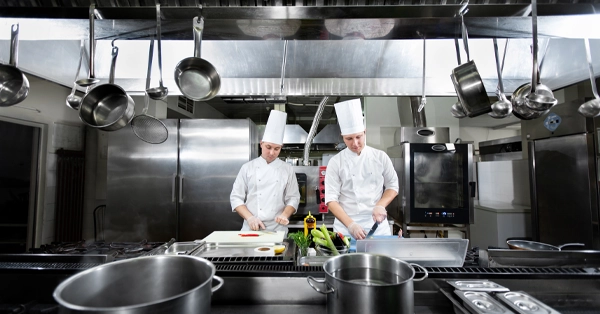
A cloud kitchen — also called a dark kitchen, ghost kitchen or virtual kitchen — is a commercial cooking space that serves delivery and pickup orders only, with no storefront and no dine-in area. That is what separates it from a traditional restaurant, which does both.
The model has grown fast in Dubai because of the city’s digital culture, high delivery demand, and significantly lower overheads than a dine-in venue. Dubai’s cloud kitchens are typically fitted with commercial-grade equipment and order-management technology.
⭐ Grow Your Cloud Kitchen with mazeed!
mazeed gives you easy-to-use accounting software with on-demand certified experts to keep your business compliant and ready to scale.
The Concept of Virtual Restaurants Explained
Virtual restaurants are a big part of cloud kitchens. They take online orders only, which lets chefs focus on the food while delivery platforms handle the rest. It is a way to test new food concepts without a large upfront commitment.
Key Features of Virtual Restaurants:
- Online ordering and delivery integration
- No dine-in facilities required
- Flexibility to operate multiple virtual brands from a single kitchen
Complete List of Cloud Kitchens in Dubai
Dubai’s cloud kitchen scene is growing fast, with new operators opening regularly. Here are the main cloud kitchen providers operating in Dubai:
3- Honestry
6- Rebel Foods
7- Kitch
Cloud Kitchen Rent in Dubai: Real Prices by Area
Rent is the single largest ongoing expense for a cloud kitchen in Dubai. It varies widely depending on location, size, facility type, and what services are bundled in.
Below are real market examples taken from current commercial listings, so you can budget against actual numbers rather than estimates.
Average Cloud Kitchen Rent Ranges
| Kitchen Type / Size | Location | Approx. Rent |
|---|---|---|
| Shared kitchen workstation (~200 sq ft) | Al Quoz Industrial Area 3 | AED 7,000/month (≈ AED 84,000/year) |
| Dedicated central kitchen (~3,000 sq ft) | Al Quoz | AED 13,000/month (≈ AED 156,000/year) |
| Mid-size standalone (~5,000 sq ft) | Al Quoz Industrial Area 1 | AED 26,000/month (≈ AED 312,000/year) |
| Large warehouse-scale (17,800 sq ft turnkey) | Dubai Investment Park 2 | AED 1,050,000/year (≈ AED 58.9 / sq ft / year) |
Tip: For startups, shared kitchens or smaller dedicated units are almost always the most budget-friendly entry point. Start lean, then move to a dedicated facility once your order volume justifies it.
What Cloud Kitchen Rent Usually Includes
- Kitchen space and basic infrastructure
- Utilities (confirm whether DEWA is bundled or billed separately)
- Shared facilities such as cold storage, washing areas and loading bays
- In some cases, equipment servicing and cleaning of shared areas
Always confirm exactly what is bundled before signing — equipment maintenance, pest control and waste disposal are the three items most often charged on top.
Factors That Affect Cloud Kitchen Rent
- Location & Delivery Radius – Prime demand zones (Business Bay, Marina, JLT) tend to be pricier than industrial areas (Al Quoz, DIP).
- Shared vs. Standalone – Shared kitchens offer lower rent and included utilities but less control.
- Kitchen Size & Power Load – Bigger kitchens require higher power, storage, and ventilation capacity.
- Fit-Out & Equipment – Ready-to-use turnkey kitchens cost more than shell-and-core spaces.
- Utilities & Services – Check whether DEWA bills, gas, waste disposal, pest control, and maintenance are included or separate.
- Lease Terms – Deposits, annual escalations, and service charges can add to the total yearly cost.
How to Rent a Cloud Kitchen in Dubai
The process is the same whether you are renting a cloud kitchen, a delivery kitchen, a ghost kitchen or a central kitchen — the terms describe the same model:
- Choose a licensed cloud kitchen provider
- Select your kitchen size and location based on your delivery radius
- Confirm what the rent includes and what is billed separately
- Sign the rental agreement
- Obtain your trade licence and food establishment licence
Most providers help simplify approvals and setup. Central kitchens, used mainly by catering companies and multi-brand restaurant groups, are priced on production capacity rather than floor area — and yes, multiple brands can operate independently from one central kitchen while sharing the same infrastructure.
Benefits for Food Entrepreneurs in the UAE
Cloud kitchens let UAE food entrepreneurs save on capital, scale faster, and test concepts with far less risk than a dine-in venue.
Comparative Analysis of Traditional Restaurants vs. Cloud Kitchens:
| Feature | Traditional Restaurants | Cloud Kitchens |
|---|---|---|
| Initial Investment | High (includes dine-in setup) | Lower (delivery-focused infrastructure) |
| Operational Costs | Higher (staff, utilities, maintenance) | Lower (optimized for delivery operations) |
| Scalability | Limited by physical space | Flexible (expand or contract virtually) |
Key Success Factors for Cloud Kitchens in Dubai
- Infrastructure cost savings: Lower startup costs due to no need for expensive locations or dine-in facilities.
- Expansion opportunities: Easier expansion within and outside Dubai without large investments in physical branches.
- Large audience pool: Access to a large customer base through online food delivery platforms.
- Ease of management: Simplified operations focused on food preparation, quality, and delivery.
- Data-driven decisions: Ability to collect and analyse customer data to inform menu and service development.
- Low risk, high profit potential: Reduced financial risk due to lower operating costs.
How to Choose the Right Cloud Kitchen for Your Food Business
A- Location and Delivery Radius Analysis
Location is the decision that most affects your economics. Look at proximity to your customer base and the realistic delivery radius from that address. A well-placed kitchen improves delivery times and cuts platform delivery costs.
B- Facility Features and Available Equipment
Check that the facility has what your menu actually requires — specialist cooking equipment, adequate cold and dry storage, and sufficient power load. This directly determines whether you can maintain food quality at volume.
C- Pricing Models and Contract Terms Comparison
Cloud kitchens use fixed rent, revenue-sharing, or hybrid models. Compare the total cost of each against your projected volume, and read the contract for hidden costs, exit terms and annual escalations.
D- Location Criteria Checklist
- Easy access for delivery companies: Ensures fast and efficient delivery.
- Reasonable rental cost: Balance accessibility against cost, prioritising proximity to high-demand commercial and residential areas.
- Suitable infrastructure: Adequate electricity, water, sanitation, and high-speed internet.
- Proximity to main roads: Reduces delivery times and vehicle turnaround.
- Available parking: Eases order pick-up for delivery riders.
- Appropriate space: Matches your expected workload and staff numbers.
- Health and safety compliance: Meets all Dubai Municipality standards.
Read more: How To Start a Small Business in Dubai
How Much Does a Cloud Kitchen Cost in Dubai?
Setup costs sit between AED 50,000 and AED 200,000, but that headline figure hides a lot. Here is the full breakdown so you can budget line by line.
| Cost Component | Typical Range | Notes |
|---|---|---|
| Trade licence + food establishment licence | AED 1,500 – 3,000 | DED trade licence plus Dubai Municipality food approval |
| Shared kitchen rent (~200 sq ft) | AED 7,000/month | Al Quoz Industrial Area 3. Lowest-cost entry point |
| Dedicated central kitchen (~3,000 sq ft) | AED 13,000/month | Al Quoz. Suits multi-brand operations |
| Mid-size standalone (~5,000 sq ft) | AED 26,000/month | Al Quoz Industrial Area 1 |
| Kitchen equipment and fit-out | AED 30,000 – 120,000 | Lower in a turnkey shared kitchen, higher in shell-and-core |
| Staffing (per month) | Varies by headcount | Chefs, kitchen assistants, and riders if delivering in-house |
| Platform commissions | Typically a percentage per order | Confirm rates with Talabat, Careem and Deliveroo individually |
| Total setup | AED 50,000 – 200,000 | Excluding ongoing rent and salaries |
The single biggest swing factor is whether you start in a shared kitchen or take a dedicated unit. A shared workstation removes most of the fit-out cost, bundles utilities, and cuts your entry point to the low end of that range.
For comparison, a traditional dine-in restaurant in Dubai runs from AED 500,000 to AED 2 million once you add prime-location rent, décor, dining furniture and front-of-house staff.
Cloud Kitchens in the UAE Beyond Dubai
Dubai dominates the market, but cloud kitchens are expanding across the UAE as delivery demand grows outside the city.
- Abu Dhabi — Al Reem Island and Al Maryah Island are the strongest zones, driven by residential density and a growing professional population. Licensing runs through the Abu Dhabi Agriculture and Food Safety Authority rather than Dubai Municipality.
- Sharjah — Lower rents than Dubai with a large residential catchment. Popular for operators serving both emirates from one facility.
- Al Ain — Smaller market, less competition, and rents well below coastal Dubai.
- Ras Al Khaimah — Growing steadily alongside tourism and infrastructure development.
The model and licensing structure are the same UAE-wide: a trade licence from the relevant emirate’s economic department, plus a food establishment licence from that emirate’s food safety authority. What changes is the rent, the competition, and which delivery platforms have strong coverage in the area.
How to Start Your Cloud Kitchen Business in Dubai
Breaking the launch into clear stages is the difference between opening on schedule and stalling at the licensing desk. Here is the full process.
1- Feasibility Study and Business Plan
A working understanding of the Emirati market is the foundation. Two phases matter before you commit capital:
Phase 1: Market Analysis and Target Audience Identification
- Competitor analysis: Local competition, their strengths and weaknesses, cuisine types and pricing — direct and indirect.
- Demand assessment: Demand for your cuisine type, market trends, and gaps you can exploit.
- Target audience identification: Define your customer segments (youth, families, professionals) and their preferences using surveys, online research and demographic data. Identify your unique selling proposition.
Phase 2: Developing a Detailed Business Plan
- Budgeting: Setup, operations and marketing costs, plus funding sources (personal, bank loans, investors).
- Resource allocation: Raw materials, equipment, staff and technology.
- Marketing plan: Channels, branding strategy, and a business name that complies with Department of Economic Development regulations.
2- Location Selection
Even without a customer-facing storefront, location drives your delivery radius, your rent and your operating costs. Use the criteria checklist above, and refer back to the rent table for realistic budgets by area.
3- Obtaining the Required Licences and Permits
You need to register your business with the Department of Economic Development (DED) and Dubai Municipality. You will need a business plan, identity proof, and a lease agreement. Licence costs typically range from AED 1,500 to AED 3,000.
- Trade Licence: Issued by the DED in each emirate. Mandatory for operating any business in Dubai.
- Food Establishment Licence: Issued by Dubai Municipality (or the Abu Dhabi Agriculture and Food Safety Authority). Covers kitchen design, equipment, hygiene practices and staff training.
- Other Permits: Depending on your kitchen’s specific setup, additional approvals may be required.
Dubai also offers a “Trader Licence” designed for e-commerce businesses, which may suit cloud kitchens given their reliance on digital platforms. Check with the DED whether it fits your model.
4- Registering with Delivery Platforms
Platform registration is your gateway to customers:
- Register with the major delivery apps — Talabat, Careem and Deliveroo.
- Compare the terms, fees and commission rates of each platform before committing.
- Build an attractive profile with high-quality photography and a clear, well-structured menu.
5- Meeting Food Safety Regulations
Food safety is strictly enforced in Dubai. Every cloud kitchen must operate a Hazard Analysis and Critical Control Points (HACCP) system, and Dubai Municipality inspects regularly.
| Regulation | Description | Compliance Requirement |
|---|---|---|
| HACCP | Hazard Analysis and Critical Control Points | Implement a HACCP system to identify and control hazards. |
| Food Handling | Proper handling and storage of food | Train staff on safe food handling practices. |
| Cleanliness | Maintaining a clean environment | Regularly clean and sanitise equipment and premises. |
6- Kitchen Design, Infrastructure and Staffing
Infrastructure essentials:
- High-speed internet: Essential for order management and delivery coordination. Any outage directly hits customer experience.
- Order management system: Integrated order handling, sales and inventory tracking, with optional remote monitoring.
- Insurance: Financial protection for the kitchen and staff in case of accidents or emergencies.
Kitchen design:
- Efficient workflow: Optimise layout for smooth movement from storage to packaging.
- Quality equipment: Select durable, efficient appliances for preparation and packaging.
- Effective packaging: Choose materials that maintain food quality in transit.
Staffing:
- Appropriate staffing levels: Right headcount per role based on workload and menu complexity.
- Skilled chefs: Experienced kitchen leadership.
- Comprehensive training: Quality standards, food safety and kitchen procedures.
- Reliable delivery: Partner with delivery services or manage in-house riders.
Read more: How to Start a Car Wash Business in UAE
What about Accounting & Tax Compliance?
You need to comply with accounting, VAT and Corporate Tax regulations in the UAE to avoid penalties. mazeed simplifies this by combining smart accounting software with FTA-certified experts in one place.
💡 All you need to do is scan your invoices and let the platform handle your FTA and IFRS compliance. You can also connect your restaurant or e-commerce platform directly so that all transactions are recorded and taxes calculated automatically.
Cloud Kitchen vs. Traditional Restaurant in UAE
Choosing between a cloud kitchen and a traditional restaurant shapes your costs, your reach and your whole strategy. Here are the differences that matter.
1- Cost Comparison and Investment Requirements
The gap is roughly tenfold. See the full cost breakdown above for the line-by-line detail.
| Cost Component | Cloud Kitchens | Traditional Restaurant |
|---|---|---|
| Initial Investment | AED 50,000 – AED 200,000 | AED 500,000 – AED 2 million |
| Rent | Lower (commercial kitchen space) | Higher (prime location) |
| Equipment | Specialised kitchen equipment | Dining area furniture & kitchen equipment |
| Staffing | Kitchen staff, delivery personnel | Wait staff, kitchen staff, management |
2- Operational Differences and Considerations
- Customer Interaction: Cloud kitchens deal with customers online; traditional restaurants offer in-person service.
- Menu Engineering: Cloud kitchens can change menus instantly. Traditional restaurants are slowed by printing and branding.
- Quality Control: Both need consistent food quality. Cloud kitchens additionally have to hold quality through delivery.
3- Buying an Existing Cloud Kitchen Instead
Some operators skip the setup entirely and buy a running cloud kitchen — inheriting the licence, the fit-out, the platform listings and, in the best cases, an existing order volume. It costs more upfront than a shared workstation but removes the licensing wait and the ramp-up period.
If you are weighing that route, read our guide to choosing a business for sale in the UAE — the due diligence on an existing food business is very different from starting one.
Read more: E-commerce Licence Cost in UAE
Cloud Kitchen Marketing Tips
In Dubai’s competitive delivery market, marketing is what separates a full kitchen from an empty one. Effective cloud kitchen marketing rests on four areas:
- Strong branding: A distinctive visual identity — logo, colours, typography — that reflects your food and service quality.
- Robust online presence: A professional website, active social content on Instagram and Facebook, and content marketing that builds search visibility.
- Attractive promotions: Introductory discounts and bundle deals to acquire customers, then loyalty offers to retain them.
- Strategic partnerships: Collaborations with delivery apps (Talabat, Careem, Deliveroo) and local food influencers to expand reach.
Your platform listing is your storefront. High-quality photography, accurate menu descriptions and fast response times affect your ranking inside the delivery apps as much as any external marketing.
Key Takeaways: Cloud Kitchens in Dubai
- Focus on locations that balance affordable rent with high delivery demand — Al Quoz and DIP offer the best value.
- Budget AED 7,000/month for a shared workstation, rising to AED 26,000/month for a mid-size standalone unit.
- Get your trade licence and food establishment licence in place before signing a lease.
- Invest in efficient kitchen layouts and an order management system from day one.
- Start lean in a shared kitchen before committing to your own facility.
FAQs about Cloud Kitchens in Dubai
How many cloud kitchens are there in the UAE?
There is no exact public count, but industry estimates suggest over 400 active cloud kitchens across Dubai, Abu Dhabi and the other emirates.
How much does a cloud kitchen cost in Dubai?
Setting up a cloud kitchen in Dubai typically costs between AED 50,000 and AED 200,000, depending on kitchen size, location, licensing, equipment, and whether you use a shared or private facility. Shared cloud kitchen spaces significantly reduce setup costs.
What is the average rent for a cloud kitchen in Dubai?
Rent ranges from around AED 7,000 per month for a shared workstation of roughly 200 sq ft in Al Quoz Industrial Area 3, up to AED 26,000 per month for a mid-size standalone unit of around 5,000 sq ft. A dedicated central kitchen of roughly 3,000 sq ft sits at about AED 13,000 per month.
How do I rent a cloud kitchen in Dubai?
Choose a licensed cloud kitchen provider, select a kitchen size and location that suits your delivery radius, confirm exactly what the rent includes, sign the rental agreement, and obtain your trade licence and food establishment licence. Most providers assist with approvals and setup.
What does cloud kitchen rent include?
Rent usually covers the kitchen space, basic infrastructure, utilities and shared facilities. Equipment maintenance, pest control and waste disposal are the items most often charged separately, so confirm what is bundled before signing.
Which is the best cloud kitchen in Dubai?
There is no single best operator — the right choice depends on your delivery radius, your menu’s equipment needs, and whether the pricing model is fixed rent or revenue-share. Judge each provider against those three criteria rather than a ranking. Deliveroo Editions, Kactus, Dynamic Kitchen, Talabat Cloud Kitchen, Rebel Foods, Honestry and Kitch all operate in Dubai with different strengths.
Are there cloud kitchens outside Dubai in the UAE?
Yes. Abu Dhabi — particularly Al Reem Island and Al Maryah Island — plus Sharjah, Al Ain and Ras Al Khaimah all have growing cloud kitchen markets with lower rents than Dubai. Licensing works the same way, through the relevant emirate’s economic department and food safety authority.
Can I buy an existing cloud kitchen in Dubai?
Yes. Buying a running cloud kitchen means inheriting the licence, fit-out, platform listings and any existing order volume. It costs more upfront than starting in a shared kitchen but removes the licensing wait and the ramp-up period.
How many cloud kitchen locations are there?
There are over 200 cloud kitchen facilities across the UAE, with the majority located in Dubai. These serve as centralised hubs for multiple virtual brands and delivery-only food operations.
Is cloud kitchen legal in the UAE?
Yes, cloud kitchens are fully legal in the UAE. You must obtain a trade licence from the Department of Economic Development (DED) or a free zone authority, along with food safety and hygiene approvals from Dubai Municipality or the relevant local authority.
What are cloud kitchens in Dubai?
Cloud kitchens in Dubai are delivery-only food establishments that operate without a dine-in facility. They prepare meals solely for online orders, using platforms like Deliveroo, Talabat and Careem to reach customers.
How do cloud kitchens differ from traditional restaurants?
Unlike traditional restaurants, cloud kitchens have no physical dining area. They cut overheads by eliminating front-of-house staff and focus entirely on fulfilling online delivery orders.
What are some popular cloud kitchen brands in Dubai?
Notable cloud kitchen operators in Dubai include Deliveroo Editions, Kactus Cloud Kitchen, Honestry, Dynamic Kitchen, Talabat Cloud Kitchen, Rebel Foods and Kitch.
How can I start a cloud kitchen in Dubai?
Obtain the appropriate trade licence, secure a suitable kitchen space (shared or independent), comply with Dubai Municipality food safety regulations, and partner with online delivery platforms to reach customers.
What are the licensing requirements for cloud kitchens in Dubai?
You need a trade licence from the Department of Economic Development (DED) or a relevant free zone authority, plus a food establishment licence and hygiene approvals from Dubai Municipality. Licence costs typically range from AED 1,500 to AED 3,000.
Are cloud kitchens profitable in Dubai?
Cloud kitchens can be highly profitable in Dubai given the strong demand for food delivery, the diverse customer base, and the cost savings from operating without a dining space. Profitability still depends on menu margins, platform commissions and rent.
Can I operate multiple brands from a single cloud kitchen?
Yes. Many cloud kitchens in Dubai run several virtual brands from one facility, allowing diversified offerings and better use of the same kitchen infrastructure. Each brand operates independently.
What are the benefits of using a shared cloud kitchen space?
Shared cloud kitchen spaces offer lower startup costs, reduced operational expenses and access to established infrastructure, making it easier to launch and scale a delivery business.
How do cloud kitchens handle food delivery logistics?
Cloud kitchens typically partner with third-party delivery platforms like Deliveroo, Talabat and Careem, which handle delivery logistics, allowing the kitchen to focus on food preparation.
What trends are shaping the future of cloud kitchens in Dubai?
Emerging trends include advanced kitchen automation, the rise of virtual-only brands, growing demand for healthy and specialised cuisines, and partnerships with hotels and real estate developers to secure prime kitchen locations.