Starting a small business in Dubai costs between AED 10,000 and AED 30,000 in a free zone, or AED 30,000 to AED 60,000 on the mainland. That is the honest range — and where you land inside it depends on four decisions you make before you file a single form.
You may also find our guide to starting a business in Dubai as a foreigner useful.
For more detail, see our guide to cloud kitchens in Dubai.
Dubai is genuinely one of the easiest places in the region to start a business: a competitive tax environment, a location connecting three continents, and a government that actively wants you to set up. But it has its own rules, and the costs that catch people out are rarely the licence fee.
This guide covers the full cost breakdown, the seven steps to get licensed, the documents you will need, and how to keep your setup lean.
How Much Does It Cost to Start a Small Business in Dubai?
Licensing is the non-negotiable first cost, but it is rarely the largest. Here is the full picture, broken down by category.
1. Trade Licence Costs by Type
Dubai licences fall into a few main categories, each priced differently. The fee typically covers registration, licence issuance and annual renewal:
| Licence Type | Cost Range (AED) | Best For |
|---|---|---|
| Commercial Licence | 12,000 – 18,000 | Trading goods or services — retail, e-commerce, general trade |
| Professional Licence | 10,000 – 15,000 | Consultants, lawyers, IT specialists. Requires proof of qualification |
| Industrial Licence | 15,000 – 25,000 | Manufacturing and production. Needs operational space and safety compliance |
| Free Zone Licence | 15,000 – 30,000 | Depends on the free zone selected. Often includes visa quota |
Free zones such as DMCC, IFZA and Dubai South are popular with new entrepreneurs because they allow 100% ownership, though the licence itself can cost more than a mainland equivalent.
The UAE also issues Crafts, Tourism and Agricultural licences for specific activities.
Read more: Cheapest Trade Licence in UAE
2. Visa and Government Charges
Immigration costs are unavoidable regardless of business type, and they multiply with headcount:
- Investor / Partner Visa: AED 3,000 – 4,500
- Employment Visa (per employee): AED 1,200 – 3,000
- Medical Test + Emirates ID: AED 1,000 – 1,500 per person
Multiply by your projected staff count. This is the line item most first-time founders underestimate.
3. Office and Real Estate
Whether you need an office, a retail unit or just a registered address, this is usually your largest recurring cost:
| Workspace Type | Cost Estimate (AED/year) |
|---|---|
| Flexi Desk (Free Zones) | 5,000 – 10,000 |
| Shared Offices | 10,000 – 25,000 |
| Mainland Office | 10,000 – 50,000+ |
| Free Zone Office | 15,000 – 30,000+ |
| Dedicated Office Space | 25,000 – 100,000+ |
| Commercial Retail Space | 30,000 – 100,000+ |
| Warehouse Space (production) | 25,000 – 75,000+ |
If your business does not need a storefront — digital marketing, consultancy, most online models — a flexi-desk keeps your overhead at the bottom of that range.
4. Operational Costs
- Salaries & wages: AED 5,000 – 25,000+/month per employee, depending on role and industry
- Utilities & services: AED 1,000 – 3,500+/month. Free zones often subsidise these; mainland setups pay standard rates
- Health insurance: AED 2,000 – 5,000+/year per employee (mandatory)
- Property and liability insurance: AED 3,000 – 10,000+/year
- Digital marketing: AED 3,000 – 15,000+/month depending on scale and channels
- Traditional advertising: AED 5,000 – 20,000+/month for medium to large campaigns
5. The Costs People Forget
- Business software: AED 2,000 – 10,000+/year for accounting software, inventory and CRM systems
- Transport and logistics: AED 2,000 – 8,000+/month if you move or deliver goods
- Miscellaneous: AED 500 – 2,000+/month for office supplies, cleaning and maintenance
- Local sponsor / service agent (mainland): AED 5,000 – 12,000+ where required for your activity
Total Setup Cost: What to Actually Budget
| Setup Route | Typical Total | What Drives It |
|---|---|---|
| Free Zone | AED 10,000 – 30,000+ | Packages often bundle licence, registration and a flexi-desk or visa quota |
| Mainland | AED 30,000 – 60,000+ | May require a physical office, service agent fees and additional approvals |
The cheapest genuine route is a low-cost free zone package for an e-commerce or consultancy activity. The most expensive is a mainland industrial licence with a warehouse and staff visas.
These are general estimates. Your actual cost depends on your specific activity, jurisdiction and setup choices — always confirm current fees with the relevant authority before budgeting.
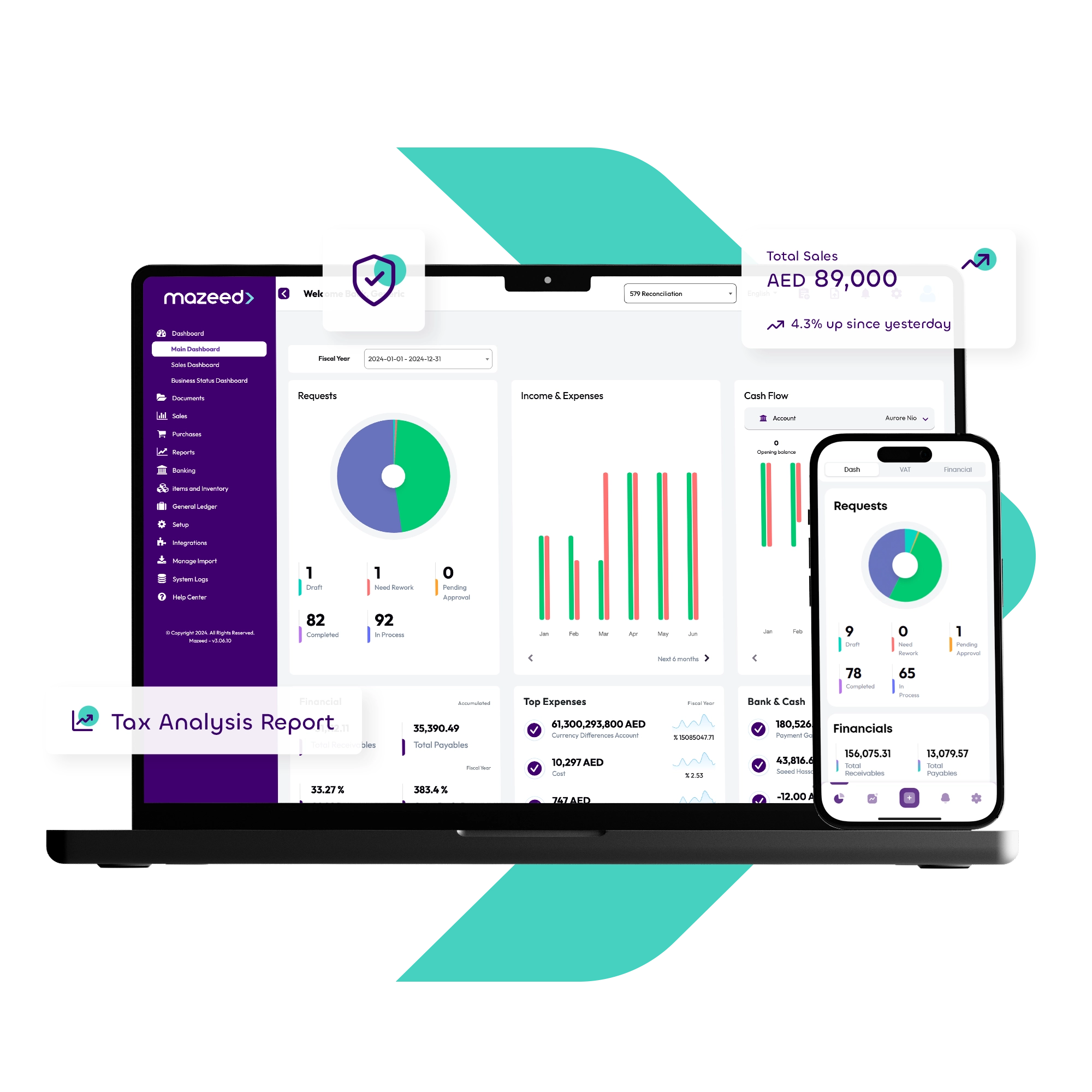
💡 Simplify Accounting with Smart Software
Handle invoices, track expenses, and stay 100% tax compliant with mazeed accounting software!
How to Start a Small Business in Dubai: 7 Steps
The process is structured and, once you know the order, straightforward. Registration takes days rather than months if your documents are in order.
1- Define Your Business Activity
Before anything else, define what your business actually does. Your activity determines your licence type, your jurisdiction options and your approval requirements — get it wrong and you restart the process.
For more detail, see our guide to CDA license.
Ask yourself:
- What services or products am I going to offer?
- What makes me different from what already exists here?
- Who is my ideal customer?
- How does this industry actually operate in Dubai?
Answering these shapes your business plan, speeds up your interaction with the authorities, and positions you properly from the start.
2- Choose a Business Name
Your trade name has to satisfy Dubai’s naming rules before it can be reserved. It should be:
- Memorable and easy to pronounce
- Relevant to your brand and activity
- Distinctive enough to avoid confusion with existing entities
- Free of offensive or religious terms
- Scalable — a name that still fits after you expand
Check availability before you commit, and check the matching domain name at the same time.
3- Choose Your Setup: Free Zone or Mainland?
This is the decision that most affects your ownership structure, where you can trade, and your total cost. It is not just paperwork.
Difference Between Free Zone and Mainland in the UAE
| Feature | Free Zone | Mainland |
| Business Activities | Specific activities determined by the free zone authorities | Wide range of business activities allowed, subject to regulations |
| Customs Duties | Generally exempt from customs duties | Customs duties may apply |
| Import/Export Restrictions | Fewer restrictions on import/export activities | Subject to UAE federal laws and regulations |
| Licensing Process | Generally faster and simpler | More comprehensive and may take longer |
| Office Space | Leasing options within the free zone | Options available across the UAE |
| Local Sponsorship | Not required | Required for certain business activities |
| Employment Visas | Usually quicker and more streamlined | Subject to Ministry of Human Resources and Emiratisation regulations |
The short version: free zone if you serve international clients or operate online and want 100% ownership with a simpler process. Mainland if you need to trade directly with the UAE domestic market or run a physical retail operation.
Related: Guide to Corporate Tax in UAE
4- Apply for Your Business Licence
Now you need official permission to operate. The licence type follows from your activity — professional services, commercial trade, or industrial production.
Where to Get a Business Licence in Dubai
For mainland businesses, the Department of Economy and Tourism (formerly the Department of Economic Development) is the primary authority. Depending on your activity you may also need approvals from the relevant emirate’s municipality or a sector regulator.
How Long Does Licensing Take?
- Mainland: typically 10 days or less for an initial response
- Free zone: often just a few days
Delays almost always come from incomplete documents rather than processing time — see the document checklist below.
5- Apply for Your Visa
Dubai’s workforce is largely expatriate, so securing the right visa category matters for both you and your staff.
Types of Visa in the UAE
A- Visit Visa
- Single-entry visa for exploring business opportunities
- Multi-entry visa for meetings, conferences and short business trips
B- Residence Visa
- Sponsored — for free zone and mainland company owners and shareholders
- Green Visa — self-sponsored, for company owners and shareholders
- Golden Visa — long-term, for investors and startup founders
6- Open a Business Bank Account
A dedicated business account is required before you can operate properly. Start this early — it is frequently the slowest step in the whole process.
- Choose the right bank: compare services, fees, minimum balance and initial deposit requirements. Reputation matters for approval speed.
- Prepare your documents: trade licence, company registration documents, passport and visa copies, plus anything specific the bank requests.
- Complete the application accurately: every detail must match your business documents exactly. Mismatches cause rejections.
- Await approval: timelines vary significantly by bank and business type.
Read more: How to Open a Business Bank Account in the UAE
7- Consider Consulting a Business Setup Expert
If you are navigating the UAE for the first time, professional guidance usually costs less than the mistakes it prevents — particularly around activity selection, jurisdiction choice and tax registration.
mazeed offers business consultancy covering document preparation through to managing your finances and filing your returns.
Documents Required to Start a Small Business in Dubai
The required documents depend on whether you set up in a free zone or on the mainland.
A- Mainland Businesses
- Receipt of initial approval plus copies of all previously submitted documents
- Copy of the lease contract, duly attested
- Memorandum of Association
- Approvals from other government entities, as required for your activity
B- Free Zone Businesses
- Completed application form
- Business plan
- Copy of existing trade licence or registration certificate (if applicable)
- Passport copies of all shareholders and the appointed manager
- Registry Identification Code (RIC) form for the appointed manager, original and notarised
- Specimen signatures of shareholders and the appointed manager
- Title deeds (if applicable)
- A letter of intent clarifying the investment idea and plan
- Two years of audited financial reports, or a bank reference certificate
C- Free Zone Freelancers and Professionals
- Application for registration
- CV or professional profile
- Reference letter from a bank
- Registry Identification Code (RIC) form for the director
Small Business Ideas in Dubai with Low Investment
The best low-capital opportunities are the ones that avoid rent, inventory and headcount. These consistently work in Dubai:
- E-commerce and dropshipping — no physical storefront required
- Digital marketing agency — service-based, can run from a flexi-desk
- Consultancy services — professional licence, minimal overhead
- Food trucks and cloud kitchens — far cheaper entry than a restaurant
- Event management — project-based with low fixed costs
- Online tutoring and education — scalable with almost no capital
- Recruitment services — commission-based revenue model
- Freelancing services — the lowest-cost licence route available
- Logistics services — growing with e-commerce volume
- Green business and recycling — supported by government sustainability targets
Home-Based Business Ideas in the UAE
A home-based licence removes your single biggest cost. Activities that suit this model:
- Freelance services
- Online retail
- Consultancy services
- Virtual assistance
- Personal fitness training
- Home-based catering
- Handmade crafts and art
- Language tutoring
- Social media management
- Home renovation consultancy
- Online education
How to Start a Business in Dubai Without Money
Starting with literally zero is not realistic — a licence and registration fees are unavoidable. But some models bring the entry cost close to the floor.
Two workable routes:
- Choose a model with no fixed costs. Consultancy, freelancing, online services and home-based businesses avoid office rent, inventory and staffing. You still pay the licence, but that can be as low as a budget free zone package.
- Find an investor. Dubai has an active investor community, and a solid business idea with a clear plan is genuinely fundable here.
Minimum Investment to Start a Business in Dubai for Foreigners
There is no universal minimum capital requirement across all activities. What you need depends on where you register:
- Free zone: startups can begin from roughly AED 10,000 – 20,000+ including licence and initial fees
- Mainland: typically requires more capital because of office and service agent costs
Many free zones allow very low starting capital, particularly for service-based, online and consultancy models. Foreigners can own 100% of a business in most free zones and, increasingly, on the mainland too — a local partner is no longer the default requirement it once was.
Why Start a Business in Dubai?
- Strategic location — sits at the crossroads of Europe, Asia and Africa, giving direct access to markets across the Middle East, Africa and South Asia.
- Tax advantages — no personal income tax, and free zones offer corporate tax exemptions for qualifying activities.
- Ease of doing business — the setup process has been progressively simplified, and licensing genuinely moves in days rather than months.
- A consumer market that spends — a young, high-income and diverse population willing to try new products and services.
- Economic diversification — reduced reliance on oil has opened real opportunity across technology, logistics, tourism, F&B and professional services.
- Government support — active initiatives, grants and incentives for new businesses and startups.
Marketing a Small Business in Dubai on a Budget
Dubai is a loud market. Brands are bold and budgets are large — which means competing on spend is a losing game for a new business. Compete on precision instead.
- Localised SEO — target specific commercial intent, not broad terms. “Accountant in Business Bay” converts; “business services” does not.
- Google Business Profile — essential for any location-based search, and free.
- Micro-influencer collaborations — smaller creators cost a fraction of the headline names and deliver far better engagement in niche categories.
- Paid social — AED 2,000 – 10,000/month is enough to test properly on Instagram and Facebook before committing more.
- Email automation — the cheapest retention channel available. Mailchimp or HubSpot on a starter plan is sufficient early on.
Wrapping Things Up
Dubai remains one of the most practical places in the region to turn an idea into a trading business. Competitive tax treatment, genuine government support, and a licensing process that actually moves.
The work is in the due diligence: define your activity precisely, pick the right jurisdiction, budget for the costs that are not on the licence invoice, and get your books and tax registration right from day one rather than fixing them later.
mazeed’s FTA-certified experts can walk you through the whole process — from document preparation to CFO-level financial planning for your new business.