
A VAT audit report reviews and certifies the accuracy of a company’s VAT compliance, reconciling reported liabilities against accounting records. For the Federal Tax Authority (FTA), it is the primary evidence that your returns match your books.
This guide covers what triggers an audit, which businesses are subject to one, the journal entries and reconciliations auditors expect to see, and how to prepare so the process is a formality rather than a scramble.
What Triggers a VAT Audit in the UAE
The FTA does not audit at random alone. Certain patterns raise the likelihood considerably:
- Inconsistencies in VAT returns — unusual movement in taxable supplies, input tax credits, or VAT payable between periods
- Consistently large input tax claims — the FTA verifies whether the claims are valid and properly documented
- Significant business changes — a sudden rise in sales, a change in ownership, or a new product line
- Tip-offs and complaints — from other businesses, customers, or employees
- Random selection — as part of routine compliance checks
Any VAT-registered business can be audited regardless of size or sector. Preparation is not about avoiding selection — it is about the audit being uneventful when it happens.
Who Is Subject to a VAT Audit?
| Annual Turnover | Audit Position |
|---|---|
| AED 150 million or more | Subject to mandatory audit |
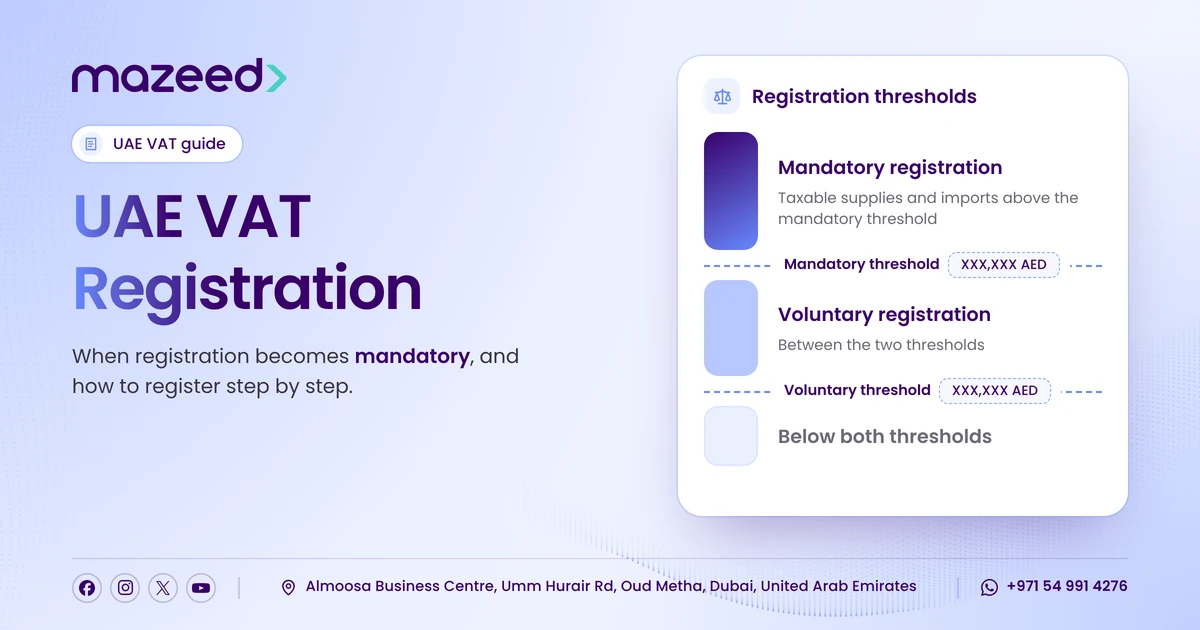
| AED 375,000 – 150 million | May be selected — at random, or where compliance concerns arise |
| Below AED 375,000 | Below the mandatory VAT registration threshold; audit applies only if voluntarily registered |
A business can also be selected where its VAT returns or financial statements show significant period-on-period variance, independent of turnover.
Read more: How to Register for VAT in the UAE
Regulatory Framework and Required Documentation
UAE VAT rules derive from the VAT Law and its Executive Regulations, with the FTA responsible for enforcement. Four compliance requirements sit behind every audit:
- Accurate and timely filing of VAT returns
- Detailed records of all VAT transactions
- Internal controls that support VAT accuracy
- Full and transparent disclosure to the FTA during the audit
Documentation the FTA expects you to retain:
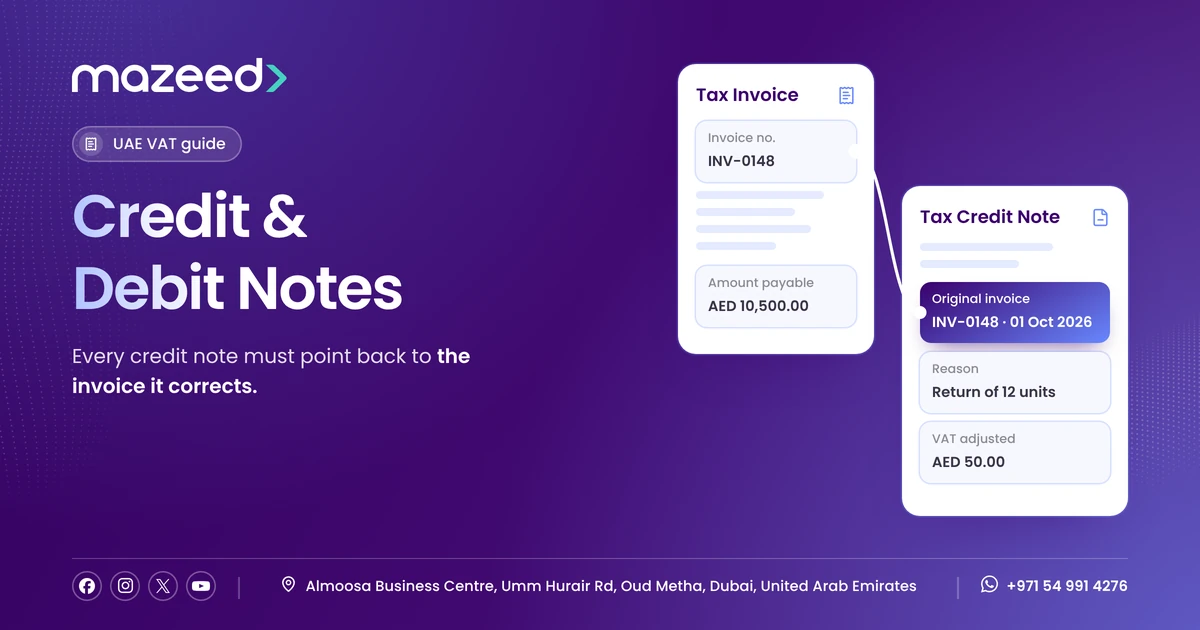
- VAT invoices and credit/debit notes
- Purchase and sales ledgers
- Bank statements and reconciliations
- Inventory records and stock counts
- Contracts, agreements, and other supporting evidence
Purpose and Components of a VAT Audit Report
A thorough VAT audit report serves to:
- Validate compliance — ensures your VAT returns match your accounting data
- Identify discrepancies — highlights errors in journal entries, workings, or reconciliation between VAT control accounts and returns
- Demonstrate accountability — shows correct input VAT treatment and accurate VAT payable records
- Support decision-making — gives management clear sight of VAT exposures, including outstanding balance sheet positions
Key components include:
- Executive summary of findings
- Reconciliations of output and input VAT
- Detailed workings supporting reported figures
- Listings of required VAT journal entries
- Recommendations for process improvements
A complete report also covers the three analytical areas auditors examine: financial statement analysis (income statements, balance sheets, cash flow), VAT return reconciliation (returns against financial statements), and supporting documentation (invoices, purchase orders, bank statements).
Read more: VAT Accounting Entries: Input and Output VAT
Pre-Audit Preparation and Documentation
Collecting source documents
Before drafting your VAT audit report, gather:
- Sales invoices showing output VAT
- Purchase invoices showing recoverable input VAT
- Bank statements for VAT payments
- Customs declarations, where applicable
Reviewing VAT journal entries
Accurate journal entries are the foundation of a clean audit report. Typical entries include:
- Sales transactions with VAT credited to the VAT liability account
- Purchases with VAT debited to the input VAT asset account
- Settlements, where workings confirm the amounts
Reconciling VAT control accounts
Compare the VAT control account balance against the net VAT liability on your returns. Discrepancies usually come from missing VAT payable postings or misclassified input VAT.
Detailed VAT workings
Robust workings clarify how each figure was derived. Yours should:
- Break VAT-inclusive totals into net and VAT components
- Show period-by-period movement in the VAT control account
- Demonstrate offsets between output VAT and recoverable input VAT
Worked example:
| Item | Amount |
|---|---|
| Total VAT-inclusive sales | AED 1,050,000 |
| VAT rate | 5% |
| VAT amount | 1,050,000 − (1,050,000 ÷ 1.05) = AED 50,000 |
| Taxable (net) amount | AED 1,000,000 |
Input VAT accounting treatment
VAT paid on purchases is recorded as a recoverable asset:
- Record input VAT — debit the input VAT account for the VAT portion of each purchase
- Classify expenses — non-recoverable VAT is booked as an expense, not an asset
- Offset in returns — net recoverable input VAT against output VAT to determine the amount payable
Recording VAT on the balance sheet
| Account | Classification | What It Represents |
|---|---|---|
| VAT Payable | Current liability | Net output VAT owed after offsetting input VAT |
| Input VAT | Current asset | Cumulative recoverable VAT where purchases exceed output VAT |
Read more: How to File a VAT Return in the UAE
Automate VAT Compliance with mazeed!
We’re the first in the region to combine AI-powered accounting software with FTA-certified experts in one place. Scan your invoices and let the platform automate VAT compliance — transaction records, exemptions and reliefs, return filing, and real-time reporting.
VAT Journal Entries and the VAT Payable Entry
| Event | Debit | Credit |
|---|---|---|
| On sales invoicing | Accounts Receivable | Sales + VAT Payable (output VAT) |
| On purchase invoicing | Purchases + Input VAT | Accounts Payable |
| On VAT remittance | VAT Payable | Cash / Bank |
Maintaining these correctly is what prevents reconciliation problems when auditors review your VAT control accounts. After remittance, the control account should reset to zero — ready for the next reporting period.
How to Calculate the Taxable Amount from a VAT Amount
Useful when vendors quote VAT-inclusive prices. At the UAE standard rate of 5%:
Taxable amount = VAT-inclusive total ÷ 1.05
VAT amount = VAT-inclusive total − taxable amount
On a VAT-inclusive invoice of AED 10,500: the taxable amount is AED 10,000 and the VAT is AED 500.
Read more: Guide to UAE VAT Calculation
Common Pitfalls and Best Practices
| Pitfall | Why It Matters | How to Avoid It |
|---|---|---|
| Omitting VAT workings | Auditors cannot verify your figures and will raise queries | Use a standardised workings template every period |
| Misclassifying input VAT | Non-recoverable VAT booked as an asset overstates your position | Confirm recoverability before posting; entertainment and exempt-related VAT is not recoverable |
| Incorrect liability records | The VAT payable entry does not match the submitted return | Reconcile the control account to the return before filing, not after |
| Neglecting reconciliations | Errors compound across periods and surface during the audit | Reconcile monthly rather than at year end |
| Incomplete documentation | Input VAT claimed without a valid tax invoice showing the supplier’s TRN | Attach supporting evidence at the point of posting |
mazeed’s Expertise in VAT Audits
mazeed guides UAE companies through VAT audit preparation, including:
- Reviewing and correcting VAT journal entries
- Designing comprehensive VAT workings templates
- Advising on input VAT accounting treatment
- Verifying balance sheet presentation
- Ensuring the VAT payable process is correct end to end
FAQs about VAT Audit Reports in the UAE
What is a VAT audit report?
A VAT audit report is an official assessment conducted by tax authorities or auditors to verify a business’s compliance with VAT laws, the accuracy of tax filings, and proper maintenance of financial records.
How do you audit VAT?
VAT auditing involves reviewing a business’s tax returns, invoices, accounting records, and supporting documents to ensure VAT has been correctly calculated, collected, and paid to the tax authority.
What is a VAT report?
A VAT report, often called a VAT return, is a periodic statement submitted to the FTA showing total sales, purchases, input VAT, and output VAT for a specific tax period.
Who is subject to a mandatory VAT audit in the UAE?
Businesses with annual turnover of AED 150 million or more are subject to mandatory audit. Businesses between AED 375,000 and AED 150 million may be selected at random or where compliance concerns arise.
What triggers a VAT audit?
Common triggers include inconsistencies between VAT returns and financial records, consistently large input tax credit claims, significant changes in business activity or ownership, tip-offs, and random selection as part of FTA compliance checks.
How long does a VAT audit take?
A VAT audit can take anywhere from a few days to several weeks, depending on the complexity of the business, the volume of transactions, and how complete the financial records are.
How far back can the FTA audit my records?
You are required to retain VAT records for the period specified by the FTA, and an audit can cover any period within that window. Confirm the current retention requirement with the FTA, as this determines how far back your records must be retrievable.
What is the purpose of a tax audit report?
It provides an independent review of a business’s tax compliance, detects discrepancies, and confirms that VAT law has been properly followed.
What documents must I provide during a VAT audit?
VAT invoices and credit/debit notes, purchase and sales ledgers, bank statements and reconciliations, inventory records and stock counts, and any contracts or agreements supporting the transactions.
What happens if the audit finds errors?
Depending on the nature and size of the discrepancy, you may need to file a correction or a voluntary disclosure, and administrative penalties may apply. Errors identified and disclosed proactively are generally treated more favourably than those found by the FTA.
How do you respond to a tax audit?
Review the audit notice carefully, gather and organise all relevant financial records, cooperate with the auditors, provide clear explanations, and seek professional advice where the position is complex.
How do I reduce the risk of a difficult audit?
Reconcile VAT control accounts monthly, keep supporting documentation attached to each posting, maintain standardised workings, and file accurately and on time. Most audit problems are record-keeping problems rather than tax-position problems.
A robust VAT audit report rests on meticulous documentation, clear workings, accurate journal entries, and transparent balance sheet presentation. Get the record-keeping right during the year and the audit becomes a retrieval exercise rather than a reconstruction.
Disclaimer: This publication is for informational purposes only and should not be considered professional or legal advice. While we strive for accuracy, we make no guarantees regarding completeness or applicability. mazeed, its members, employees, and agents do not accept or assume any liability, responsibility, or duty of care for any actions taken or decisions made based on this content. For official guidance, please refer to the UAE Ministry of Finance and the Federal Tax Authority