Tax
Expert insights on navigating UAE’s accounting and tax landscape
- TaxVAT Registration in the UAE: A Complete Step-by-Step Guide Do you have to register for VAT in the UAE? See the AED 375,000 threshold, the documents you need, how to apply on EmaraTax, and what late registration costs.mazeed Tax Team · 14 Oct 2026Read article
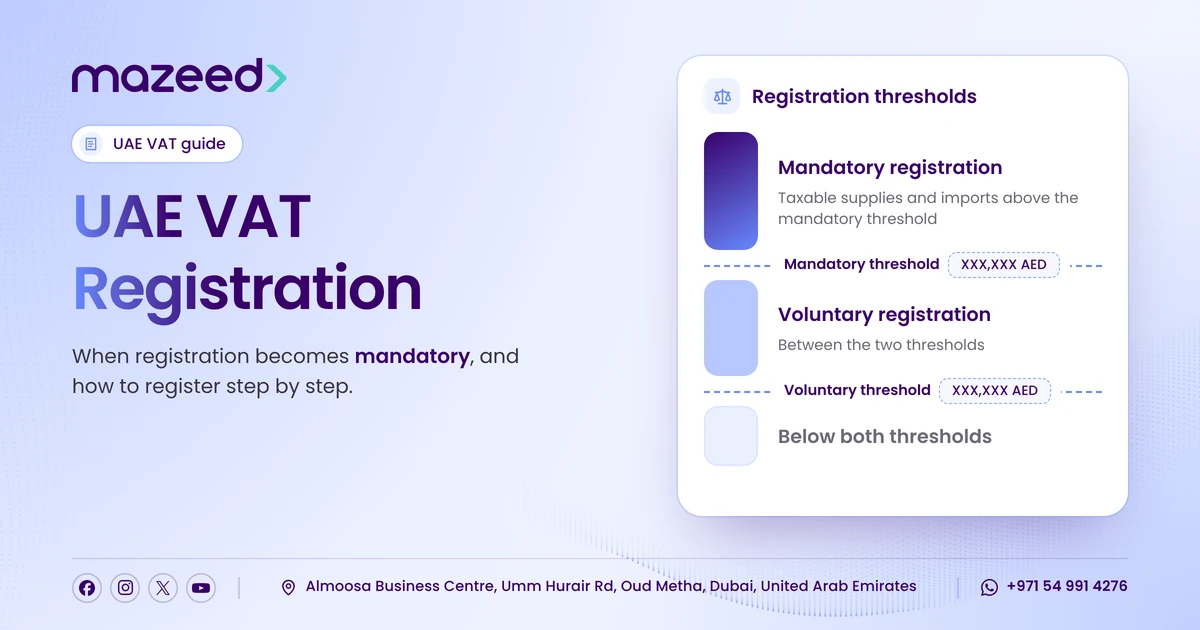
- Tax Credit Notes and Debit Notes in the UAE: Format, Rules and When to Issue OneAn invoice needs correcting. Learn when to issue a credit note, what it must contain, the 14-day rule, how debit notes work in the UAE, and what e-invoicing changes.mazeed Tax Team · 14 Oct 2026Read article
- TaxTax Residency Certificate in the UAE: Who Needs One and How to Get It Need proof of UAE tax residency to claim double taxation treaty benefits? See who qualifies, which documents the FTA asks for, the fees and how to apply.mazeed Tax Team · 13 Oct 2026Read article

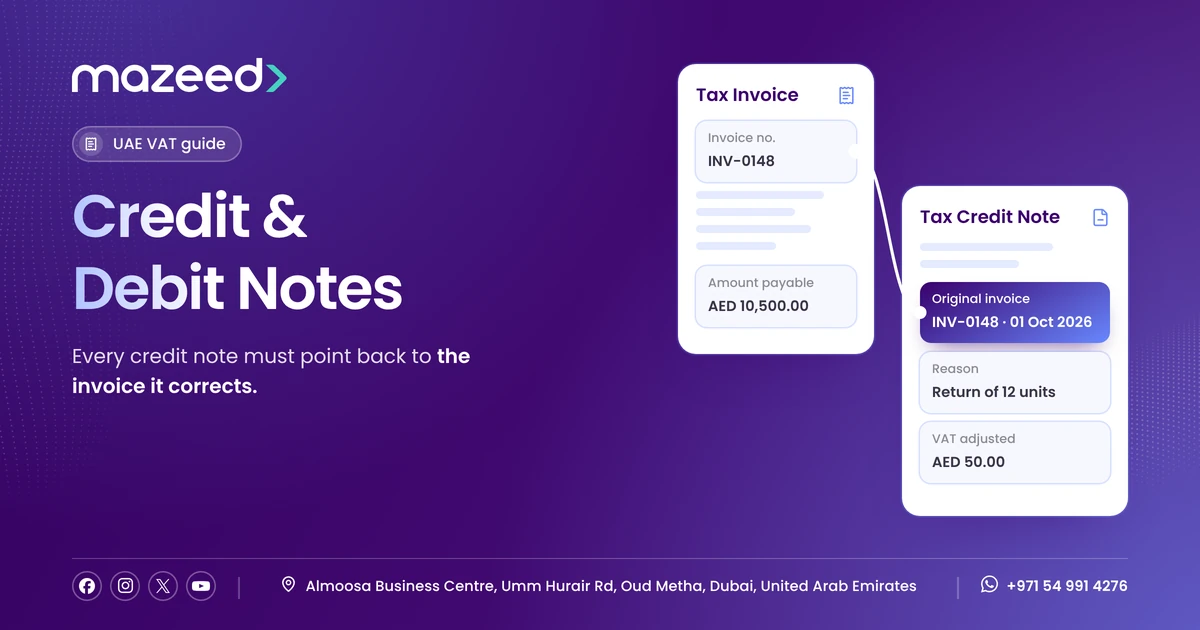
- Tax Zero-Rated, Exempt, and Out of Scope: UAE VAT Treatment ExplainedZero-rated, exempt or out of scope? Learn how each UAE VAT treatment affects your input VAT recovery and your return.mazeed Tax Team · 13 Oct 2026Read article
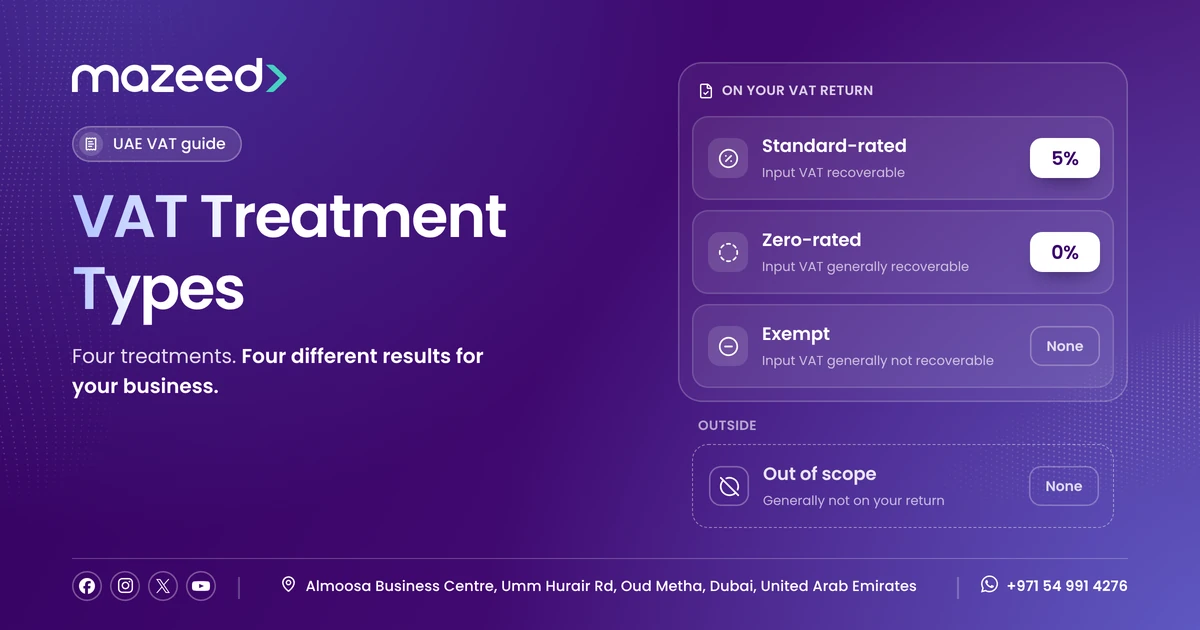
- TaxTRN Verification in the UAE: How to Check a Tax Registration NumberA practical guide to verifying a UAE Tax Registration Number (TRN): what it is, how to check one through the FTA in under a minute, why matching the registered name matters, and what to do when a TRN doesn t check out.Anas Massoud · 27 Sept 2026Read article
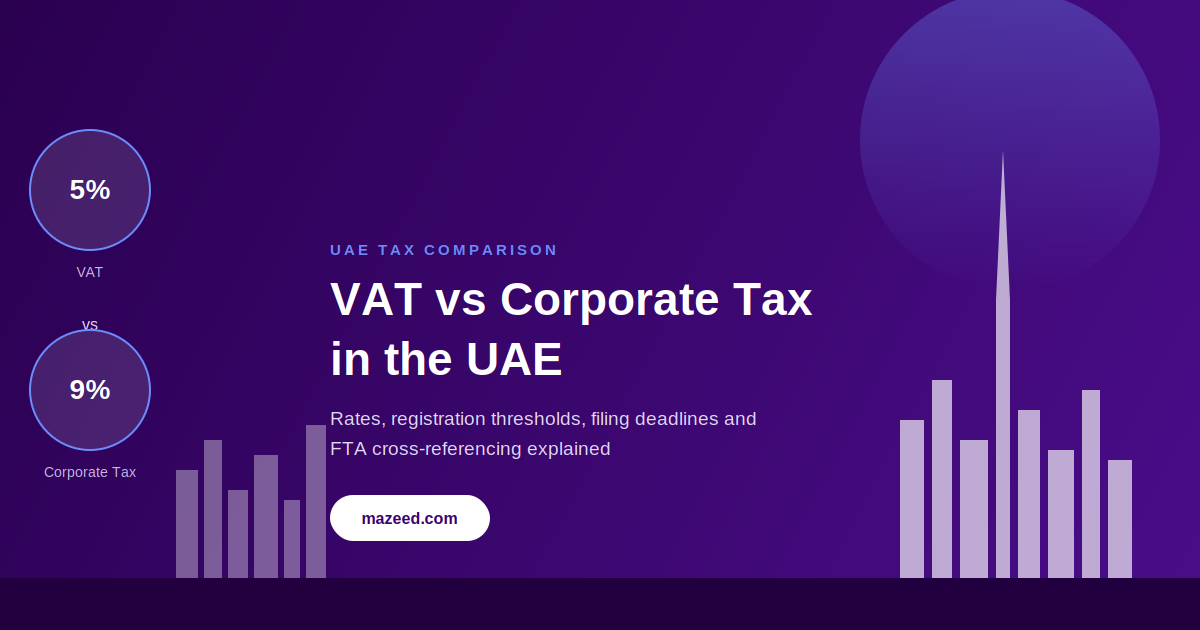
- TaxDifference between VAT and Corporate Tax in UAE VAT vs Corporate Tax in the UAE: The Complete Comparison Guide The UAE now operates two concurrent federal tax systems that every business must manage separately: Corporate Tax, which launched on 1 June 2023 under Federal Decree-Law No. 47 of 2022, and VAT, which has applied since 1 January 2018 under Federal Decree-Law No. 8 […]Anas Massoud · 16 Aug 2026Read article
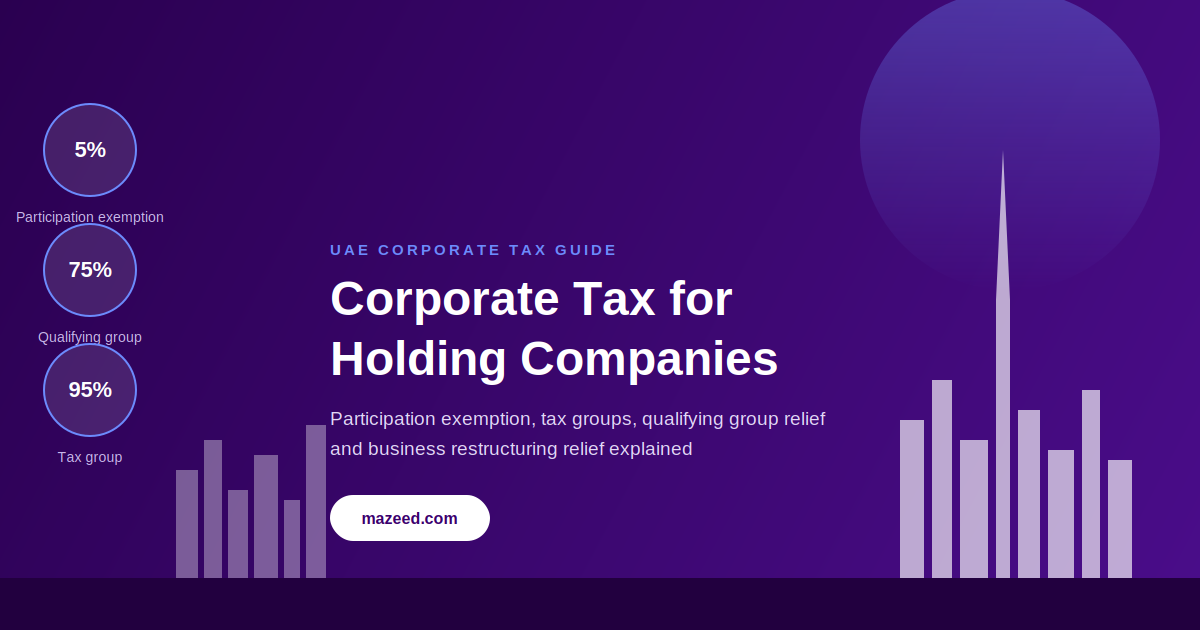
- TaxUAE Corporate Tax for Holding Companies and Groups 2026: Complete Guide UAE corporate tax applies to every holding company and every member of a corporate group without exception, but the law provides four powerful mechanisms that allow groups to manage their tax position efficiently and legally: the Participation Exemption (Articles 22 and 23), which exempts qualifying dividends and capital gains; Tax Group formation (Articles 40 to […]Anas Massoud · 13 Aug 2026Read article
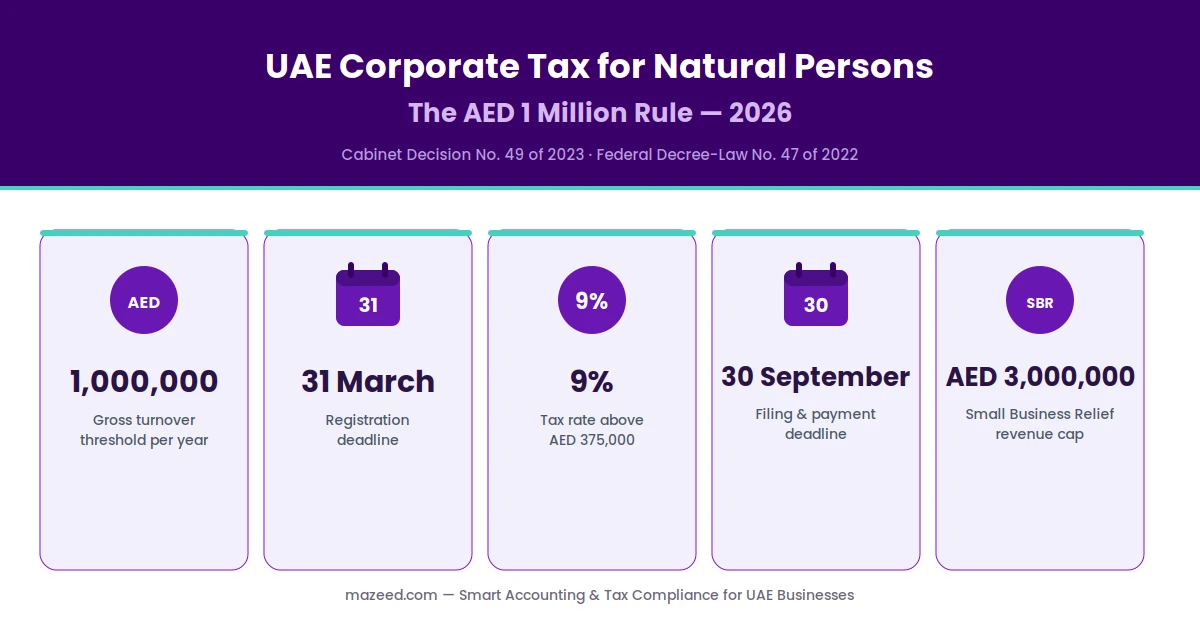
- TaxUAE Corporate Tax for Natural Persons: The AED 1 Million Rule 2026 UAE corporate tax applies to individuals as well as companies. Under Cabinet Decision No. 49 of 2023, any natural person conducting business or business activities in the UAE whose total business turnover exceeds AED 1 million in a Gregorian calendar year becomes a taxable person subject to full registration, filing, and payment obligations under Federal […]Anas Massoud · 11 Aug 2026Read article
- TaxUAE Extends Corporate Tax Small Business Relief Until 2029 The UAE has announced a major update that directly benefits startups and SMEs. The Corporate Tax Small Business Relief has now been extended to cover tax periods ending on or before December 31, 2029, pursuant to Ministerial Decision No. (131) of 2026. This decision by the UAE Ministry of Finance gives small businesses more time to grow without the pressure […]mazeed Tax Team · 10 Aug 2026Read article

- TaxUAE Corporate Tax Penalties 2026: Complete Guide Including the AED 10,000 WaiverUAE corporate tax penalties apply whether or not any tax is owed. The AED 10,000 late registration UAE corporate tax penalty, the AED 500 per month late Corporate Tax filing charge, the 14% per annum late payment rate, and the AED 250,000 cap on transfer pricing disclosure failures are all active and enforced by the […]Anas Massoud · 9 Jul 2026Read article